
info@wearintell.com

+86 13510755085

ODM Smartwatch Fall Detection Solutions

As a professional ODM fall detection watch manufacturing partner, we provide one-stop support from hardware, firmware, custom fall detection algorithm to project delivery and launch.

3,000+

MOQ

30-45

STANDARD LEAD TIME

350,000+

MONTHLY CAPACITY
Android / RTOS
SUPPORT PLATFORMS

SDK / API

ALGO INTEGRATION

Why Many ODM Fall Detection Watch Projects Fail at Mass Production

Why do many ODM projects end up failing at the mass production stage?You may have already encountered these problems.
OEM smartwatch fall detection project management and SDK integration comparison
Perfect Samples, Troubled Mass Production
During the initial sampling stage, everything can be fully coordinated and well executed. But once formal mass production begins:
 
  • Sensor batch consistency becomes unstable
  • Firmware versions get increasingly chaotic
  • Customer complaints lack consistent follow-up
  • Project managers keep changing frequently
For wearable fall detection devices, mass production consistency matters far more than demo performance of prototype samples.
Technical Integration Is Like Opening a Blind Box
Many OEM smartwatch fall detection projects only reveal problems after official API or SDK joint debugging starts:
  • Incomplete SDK documentation
  • Non-standard communication protocol interfaces
  • Raw sensor data not open for access
  • Any minor feature modification requires rescheduling the entire development cycle
In the end, the product launch timeline is not decided by you, but by the supplier.
Deep Customization Means Difficult Migration Later
Many clients only focus on “whether it can be done” in the early stage. It is not until the later phase that they realize:
  • Locked-in algorithms
  • Tightly bound App
  • Non-migratable firmware
  • Incomplete interface permissions
Eventually, the cost of switching suppliers is even higher than launching a brand-new project.

ODM Fall Detection Watch Development Process — From Requirement to Mass Production

ODM/OEM Cooperation Process: From requirement confirmation to mass production delivery, every stage has clear time milestones
OEM smartwatch fall detection engineering and technical support meeting

Phase 1: Requirement Confirmation

1–3 Days
After you submit the project requirements, our technical and business teams will conduct a simultaneous evaluation covering all the dimensions below.
Evaluation Content
  • Appearance and structural requirements
  • Firmware functional requirements
  • Android / RTOS system requirements
  • Fall detection algorithm requirements
  • App and platform docking requirements
  • Certification and target market requirements
You will receive
  • Feasibility solution
  • Preliminary quotation
  • MOQ explanation
  • Estimated development cycle
  • Recommended hardware platform solution

Phase 2: Sample Development

7–15 Days
Once the solution is confirmed, we will enter the sampling phase. Samples will be sent for testing upon completion, allowing you to verify all core functions directly.
Sample Content
  • ID appearance sampling
  • Watch strap and packaging confirmation
  • Mainboard and sensor configuration
  • Basic firmware burning
  • Functional testing and stability verification
Verifiable Functions
  • Fall detection logic
  • GPS positioning
  • LTE/WiFi communication
  • APP linkage
  • Sports and health monitoring functions

Phase 3: Software Joint Debugging and Algorithm Integration

About 4 Weeks
This is the core stage of the entire private label smartwatch fall detection project.
Use Your Own Algorithm
  • Open IMU raw data interface
  • Provide UART debugging interface
  • Support log printing
  • Support algorithm parameter optimization
  • Engineers can complete algorithm adaptation directly
Use Third-Party Algorithm Solution
  • Mass production integrated: Cyweemotion
  • Mass production integrated: Gomore
  • Support joint development with third-party algorithm vendors
APP & Platform Joint Debugging
  • RESTful API
  • Webhook
  • SDK Push
  • MQTT
  • Ademco Contact ID

Phase 4: Pilot Production

15–30 Days
We will conduct a small-batch verification before official mass production. You can launch market tests first before deciding to scale up the order.
Verification Items
  • Firmware stability verification
  • Sensor consistency testing
  • Battery cycle testing
  • Network stability testing
  • Aging testing
  • Packaging and logistics verification
You Can Proceed Simultaneously
  • Market testing
  • Channel verification
  • Platform trial operation
  • Customer feedback collection

Phase 5: Mass Production & Delivery

30–45 Days
The mass production phase will be followed up synchronously by the production, quality and project teams, with flexible delivery arrangements available.
Standard Lead Time
  • Standard configuration: 30–45 days
  • Deeply customized firmware: Approximately 45 days
Support Options
  • FORECAST capacity reservation
  • Split delivery
  • Full support for multi-country certifications
  • Overseas logistics assistance

Customizable OEM Smartwatch Fall Detection Capabilities

What can you customize? We support full OEM smartwatch fall detection customization from hardware to platform.

Appearance & Hardware Customization

Appearance
  • Watch dial size and shape
  • Strap material and color
  • Private label Logo
  • Packaging design
  • Multi-language user manual versions
Hardware
  • Custom charging dock

Firmware & System Customization

System Options
  • Android 8.1–13
  • RTOS low-power solution
  • Function module switch
  • UI customization
  • OTA upgrade
  • Custom reminder logic
Memory Configuration
  • 1GB + 8GB
  • 2GB + 16GB
  • 3GB + 16GB
  • 3GB + 32GB

Custom Fall Detection Algorithm Integration

Algorithm Integration
  • Deployment of your proprietary algorithms
  • Third-party algorithm integration
  • Raw sensor data access
  • Parameter optimization
  • Fall event log output
Sensors
  • Accelerometer
  • Gyroscope
  • Barometer
  • Heart Rate Sensor

App & Backend System

Applications
  • Android App
  • Brand UI
  • Push notification
  • GPS map
Platform Docking
  • Health data synchronization
  • API integration

Open SDK & API for ODM Fall Detection Watch Integration

The level of technical openness determines your migration cost.
Layer 01

Sensor Data Layer Openness

Supported Functions
  • IMU raw data reading
  • Sampling rate configuration
  • Range configuration
  • Data output debugging
Default Configuration
  • 52Hz sampling rate
  • Maximum configurable rate up to 6.6kHz
Layer 02

Algorithm Layer Openness

Support Modes
  • Your proprietary algorithms
  • Third-party algorithms
  • SDK deployment
  • UART debugging
  • Log tracking
Layer 03

Protocol Layer Openness

Supported Protocols
  • RESTful API
  • MQTT
  • Webhook
  • SDK Push
  • Ademco Contact ID
Layer 04

System Layer Openness

Supported Systems
  • Android wearable OS
  • RTOS
  • Private App deployment
  • OTA updates
Your algorithm team does not need to rely on black-box interfaces; the initial integration cycle is about 4 weeks. Complete API documentation will be provided after NDA signing, and the scope of all open interfaces and code ownership can be written into the contract to avoid the risk of technology lock-in in the future.

OEM Smartwatch Fall Detection Manufacturing Capacity & Quality Assurance

For wearable medical alert watch projects, it is often not marketing that truly affects brand reputation, but delivery stability.

Capacity Assurance

SMT Production Lines7 Lines
Assembly Lines5 Lines
Daily Production Capacity15,000 Units
Monthly Production Capacity350,000+ Units
Long-cycle Demand Forecast✅️
Multi-model Parallel Production✅️
Quarterly Capacity Locking✅️

Batch Production Records

Firmware version
Sensor batch
Aging test records
Factory inspection data
If any batch-related issues arise later, we can trace them to the exact time and production line.

After-sales Support

Full Device Warranty12 Months
Long-term Parts Supply✅️
Overseas Maintenance Support✅️
Europe Service Center✅️
Japan Service Center✅️

Quality System

ISO 9001
Quality Management
ISO 13485
Medical Device
CE
EU Market
FCC
North America Market
RoHS
Environmental Certification
We provide complete certification documentation for EU and North American markets.

ODM Fall Detection Watch FAQ

A: Yes.We open IMU and related sensor data interfaces, allowing your algorithm team to directly access raw data for debugging.UART debugging and log output are supported.The initial integration cycle is generally around 4 weeks.
A: Yes.If you only need the following customizations:
  • Logo
  • Packaging
  • Brand name for the AppIt can be launched quickly with an MOQ of no less than 3,000 units.
A: Yes.Recommended process:Sample → Pilot production → Official mass production.You do not need to take on large-scale inventory risks at the initial stage.
A: All products keep complete records:
  • Production batch records
  • Firmware version records
  • Inspection data
  • Aging test recordsAny issue can be traced to the specific production node with clear accountability.
A: Yes. We can provide anonymized event logs and alarm accuracy data from operating elderly care facilities in Europe.
Request Your ODM/OEM Smartwatch Fall Detection Quote
Submit Your ODM/OEM Customization RequirementsOur technical and business team will reply to you within 1 working day.

Contact Us

Related Blog

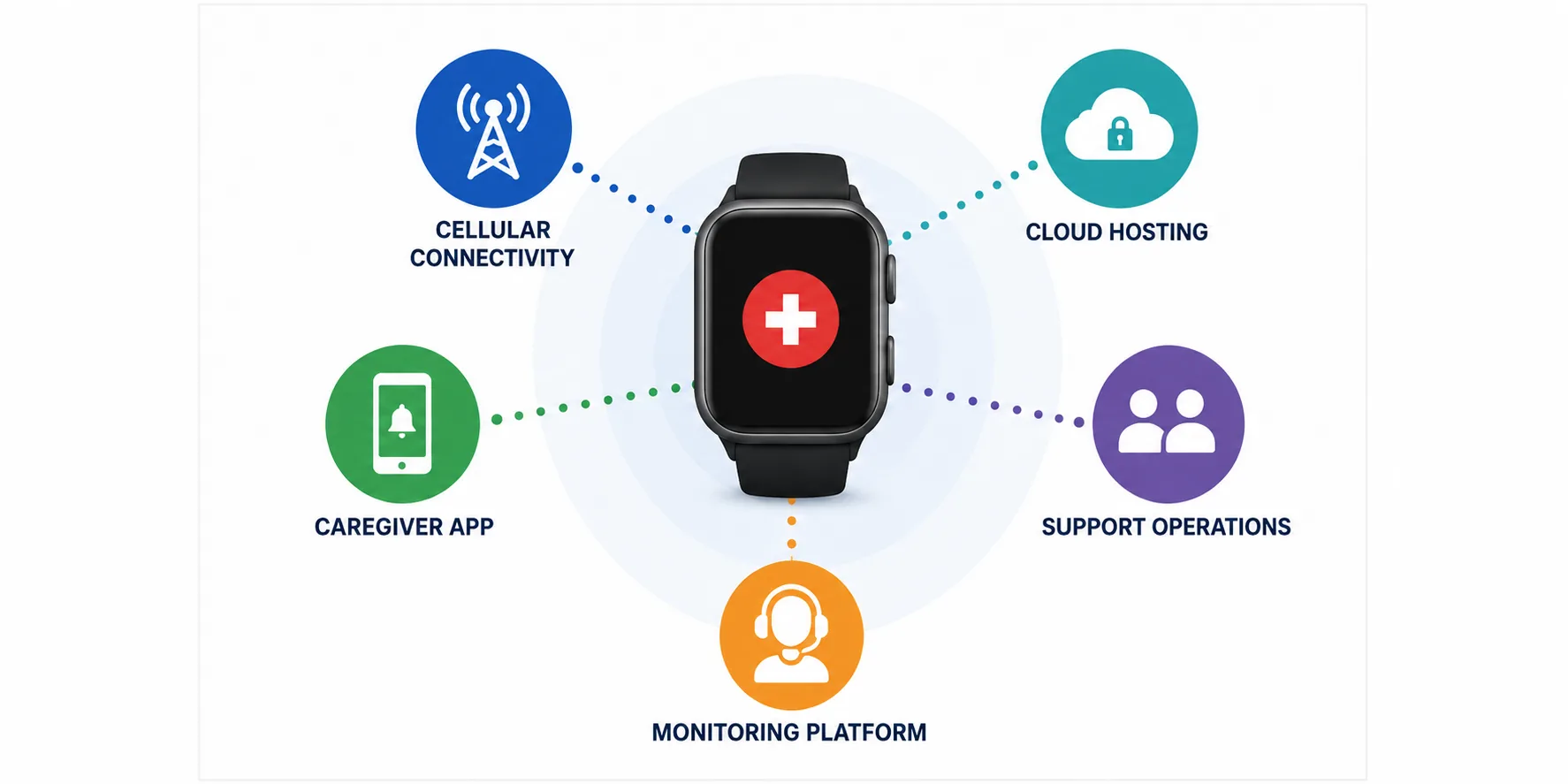
medical alert watch service ecosystem

Do Medical Alert Watches Have Monthly Fees?

A medical alert watch with no monthly fee may appear to offer emergency alerts, location reporting and communication without any continuing expense. In practice, the phrase usually describes one part of the service arrangement rather than the full cost of operating a connected medical alert program. The device may be
Read More »
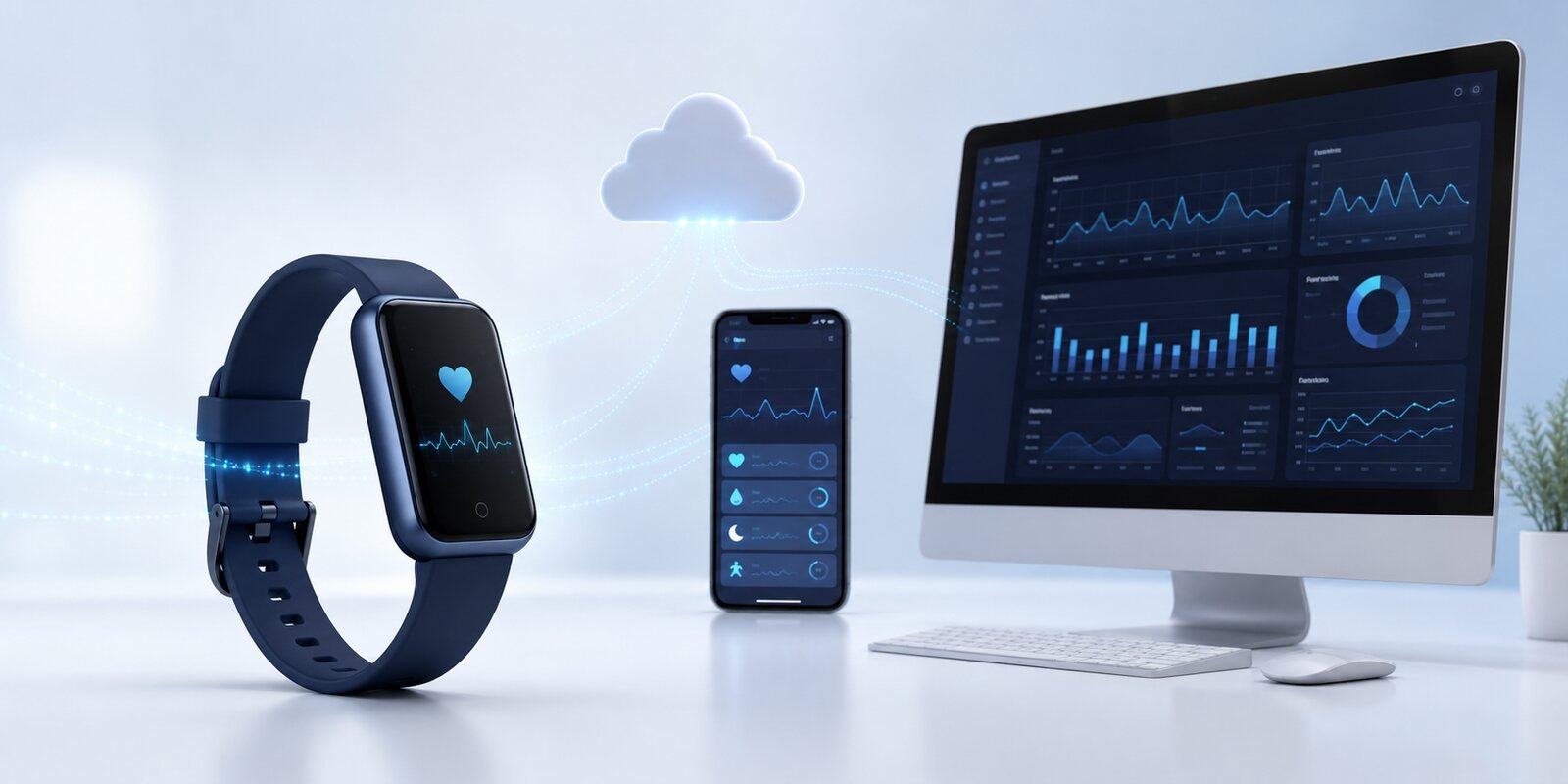
Wearable health monitoring device connected to an app and cloud platform

How Does a Wearable Health Monitoring Device Work?

A wearable health monitoring device is a body-worn electronic product that collects selected signals and sends useful data to an app, cloud platform or professional dashboard. The sensor is only the starting point. A working device also needs electronics to read the signal, firmware to control data collection, a connection

Read More »
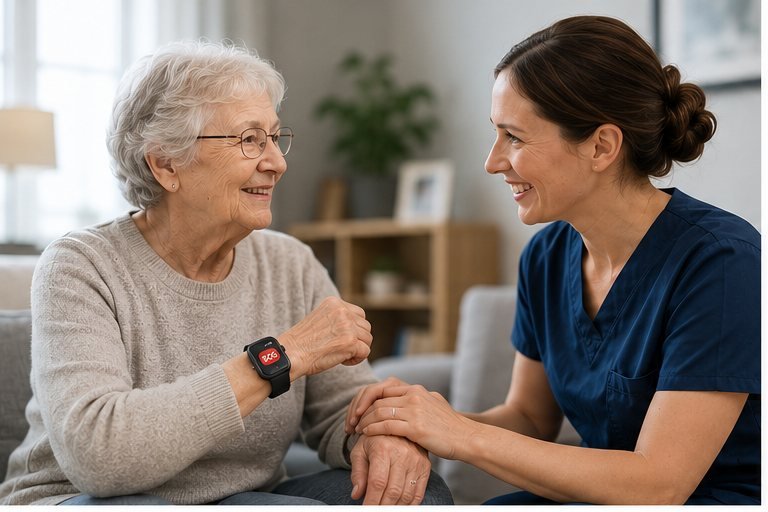
Smart watch for seniors with fall detection in a care program

How to Choose a Smart Watch for Seniors with Fall Detection

Selecting a smart watch for seniors with fall detection involves more than confirming that the device includes an automatic fall alert. For telecare providers, senior care organizations, assisted living operators and community care programs, the watch must support a complete operational process—from daily wearing and charging to alert confirmation, communication,

Read More »

Get a solution.

Let’s Have A Chat