
Imagine a supplier discontinues the LTE module specified for the next smartwatch production batch. Procurement finds a replacement with similar headline specifications. That is a reason to open a change review, not permission to install it. BOM change control should identify the affected product revision, assess the substitution, collect verification evidence and authorize a traceable production cut-in. Physical fit and similar datasheet values do not establish whole-watch equivalence. This hypothetical module replacement illustrates how engineering, quality and purchasing can reach a documented decision without treating every change as a complete redesign.
Why Can a Small BOM Change Affect a Smartwatch?
A bill of materials identifies the parts and materials specified for a product. A BOM revision identifies a controlled version of that list. The released configuration should connect it to the relevant drawings, firmware and manufacturing instructions. A component substitution changes an approved part or source; it needs review against that configuration.
In the hypothetical module case, “supports LTE” answers too little. The proposed review should examine interfaces, required network behavior, power demands, firmware dependencies and the antenna arrangement in the finished enclosure. Compare the requirements of the watch with the replacement’s documented characteristics, rather than comparing only the purchase descriptions.
Other substitutions deserve the same reasoning at an appropriate depth. A battery review should consider charging and thermal behavior. A motion-sensor review should consider calibration and the algorithms that consume its output. Identify the possible interaction first, then decide what evidence would establish acceptable performance.
Record the proposed change, why it is needed and which released design it affects. Approve it against evidence, then verify that production implemented the authorized configuration.
Timing matters too. EVT, DVT and PVT validation establishes evidence at different development stages. A substitution after design approval needs an explicit assessment of which conclusions still hold and which require new evidence.
Which Smartwatch Component Changes Need Review?
Separate an administrative correction from a change to the product. Correcting a description while retaining the same approved part may require document verification. Changing a component, supplier, material or associated firmware requires an impact assessment. Do not use “equivalent” as a substitute for recording what changed.
The matrix below proposes review areas. It does not prescribe the same test program for every watch or report any measured result.
Component Change Impact Matrix
| Component change | Possible impact | Review or test focus |
|---|---|---|
| Cellular module substitution | Interface, network, firmware or power differences | Required bands and services; drivers; current profile; applicable approval evidence |
| Antenna or matching-network change | Radio performance in the final enclosure | RF assessment; mechanical arrangement; relevant test coverage |
| Battery or protection-circuit change | Charging, protection or thermal behavior | Electrical compatibility; charging and thermal tests; applicable transport evidence |
| Motion-sensor replacement | Calibration or algorithm-input differences | Interface and sampling behavior; calibration; supported algorithm verification |
| Display or touch-controller change | Driver, interaction or power differences | Firmware compatibility; controls and readability; power behavior |
| Enclosure or skin-contact material change | Fit, sealing or contact-related concerns | Mechanical and sealing checks; appropriate material/contact evaluation |
Record hardware and firmware dependencies together. If the substitute requires a new driver, name the permitted firmware revision and address existing stock that cannot use it. Review depth should follow the changed characteristics, product requirements and consequences of failure. Engineering acceptance and regulatory assessment remain separate decisions; neither should be inferred from a purchasing approval. When reviewing wearable product development capabilities, establish who owns the hardware, firmware and verification impacts of the proposed change.
How Should a Proposed BOM Change Be Approved?
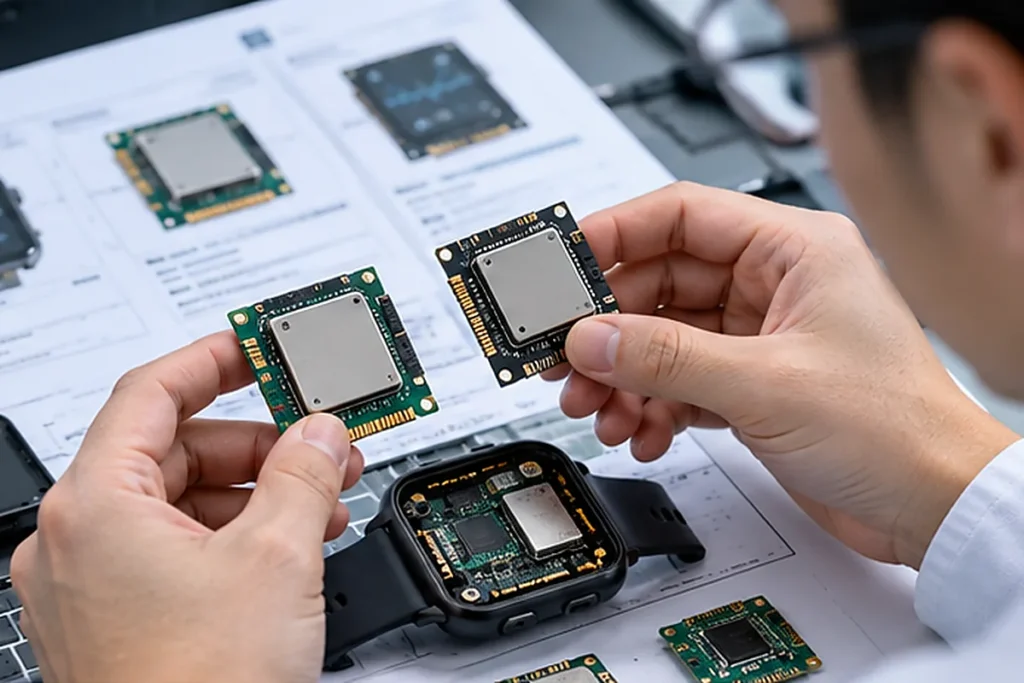
Build a decision record around the proposed substitution. Start with the discontinuation notice or other trigger, old and new manufacturer part numbers, revisions, source, rationale and required timing. Identify the released products, documents and inventory potentially affected. Keep supplier evidence tied to the exact proposed part.
Companies often call the initiating record an engineering change request, or ECR; an authorizing record an engineering change order, or ECO; and the communication an engineering change notice, or ECN. Terminology and systems vary. These names do not establish a universal legal approval chain.
Have the relevant owners review the same proposal. Electrical and RF engineers should assess the changed interfaces and radio arrangement. Firmware owners should identify driver and configuration dependencies. Mechanical, quality and production teams should review fit, reliability and process implications. Procurement should check availability, sourcing and inventory disposition. Include regulatory expertise when the product or affected evidence calls for it.
Turn concerns into a bounded verification plan. For each question, identify the requirement, test or supplier evidence, sample configuration and acceptance criterion. Record unresolved assumptions rather than approving a substitution on the expectation that later tests will pass. Auditing a wearable device manufacturer provides broader supplier-evidence context; this review concerns the specific proposed change.
Assign approval authority under the project’s governance and contract. Engineering, quality, production and procurement may have different decisions to make. Obtain customer consent where the agreement requires it; do not assume every correction needs client sign-off. A deadline or stock shortage should be visible to approvers, but should not stand in for missing evidence.
Release the approved BOM revision together with affected drawings, firmware combinations, inspection criteria and work instructions. State what is authorized, what remains prohibited and when the change takes effect. Preserve approvals and notify the people who purchase, receive, program and assemble the units. An approval record without implemented document changes leaves the line with an ambiguous build instruction.
What Should Be Retested After a Component Substitution?
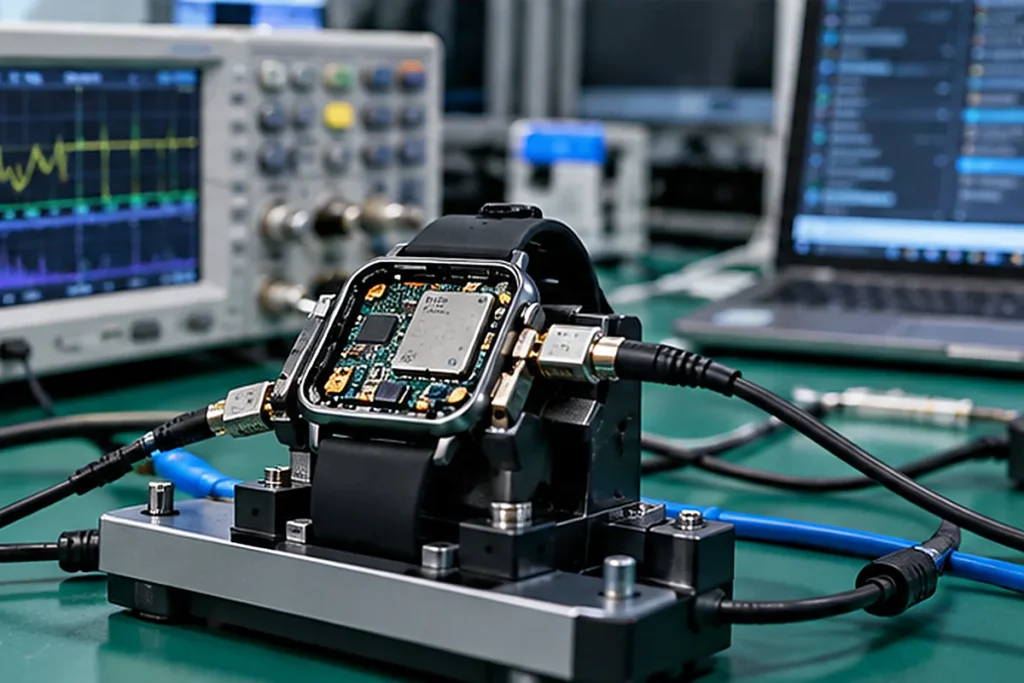
For the hypothetical LTE replacement, compare the required electrical and software interfaces, network bands and supported services. Test relevant connection and recovery behavior with the intended configuration. If the watch requires voice, verify that function specifically rather than treating data connectivity as evidence that calls work.
Review driver behavior, startup, sleep/wake operation and current draw under the agreed use conditions. Assess antenna and enclosure interactions. Link observations to the actual board, module, antenna and firmware versions tested. Ask the responsible specialist whether existing regulatory or operator documentation covers the changed configuration and what additional evidence is needed.
Select other tests by the affected risk. For a battery substitution, review charging, protection, thermal behavior and applicable transport documentation. For an accelerometer, check calibration and any supported fall-detection algorithm that uses its measurements. For an enclosure material, assess relevant fit, sealing and skin-contact concerns. Supplier data can support the review; document which conclusions still need finished-device verification.
For a US medical device subject to 510(k) requirements, use FDA’s change-assessment guidance to determine whether the proposed modification requires a new submission. Document the rationale; a component substitution does not automatically require new clearance. These rules apply only to devices within the relevant regulatory scope.
Hypothetical Case: Replacing an LTE Module Before the Next Production Batch
A supplier discontinues module A before the next build. A change request proposes module B against BOM R1; procurement orders evaluation samples while production remains limited to the existing authorization.
In this hypothetical assessment, the review finds that module B needs a driver change. The team rejects a purchasing-only substitution and couples the proposal to firmware F2. The evidence record must identify the tested board, module, antenna, enclosure and software; a supplier compatibility statement alone cannot close the review.
Suppose verification with F2 meets the agreed acceptance criteria and the regulatory owner documents the applicable submission and operator-evidence assessment. Engineering, quality and production can then authorize the change, with customer consent only where required by contract. An unresolved acceptance issue would keep release on hold.
The approved example configuration becomes BOM R2/module B/firmware F2, effective for the first production units in lot L2. The lot record identifies their serials, report references and approvals. Old module A stock receives a separate disposition rather than entering the new build by default. All identifiers and outcomes are hypothetical, not WearIntell approvals or test results.
How Should Production Trace the Approved BOM Revision?
Define the cut-in boundary before the line changes: a production lot, date with controlled segregation, serial-number range or another suitable identifier. Link that boundary to the released BOM and permitted hardware/firmware combinations. Distinguish engineering samples and qualification units from saleable production stock.
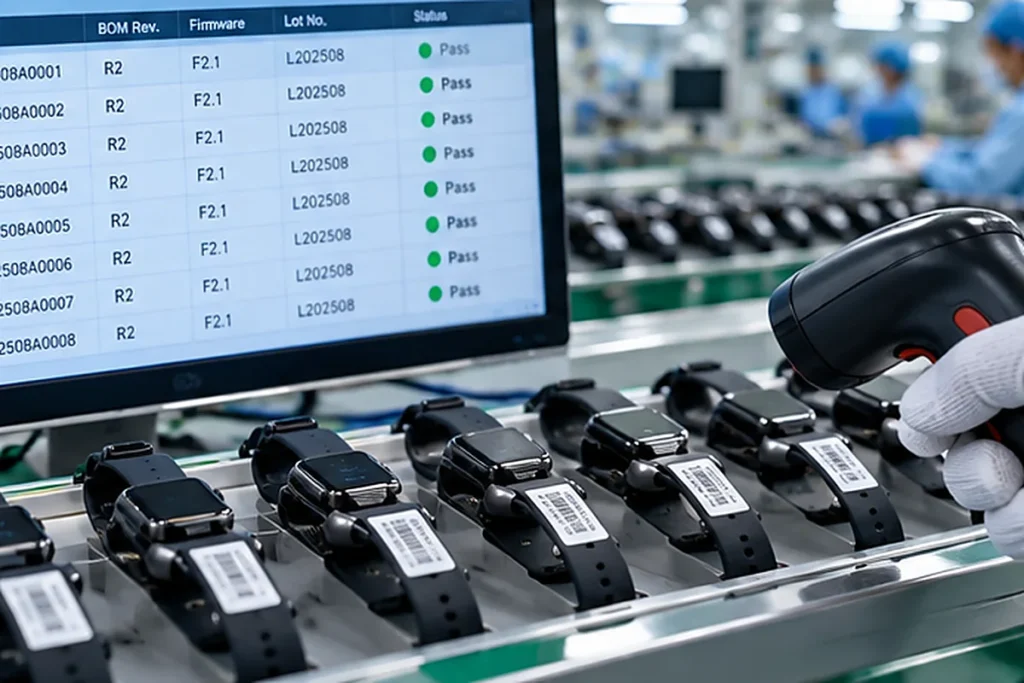
A hypothetical revision record might read: BOM R1/module A changes to BOM R2/module B; approved firmware F2; effective lot L2; verification report VR2; approvals retained in change record CR2. The record should also identify affected drawings and instructions. It is an example of record content, not proof of an actual approval.
Tell purchasing which part and revision may be ordered. Tell incoming inspection what documents and markings establish acceptance. Notify the line which instructions and firmware to use. Segregate old, rejected or unapproved material so it cannot enter the revised build by convenience. Record whether old stock will be used under its original configuration, reworked, returned or otherwise dispositioned through an authorized process.
At manufacturing transfer, clarify who owns these records and the finished-unit configuration history.
Traceability should let a field investigation identify affected watches without guessing from shipment dates alone. Use the approved configuration and evidence gaps to frame an ODM engineering discussion with WearIntell. The deciding question is practical: can the team identify exactly which shipped watches contain each approved configuration?