
Remote patient monitoring devices include connected blood pressure cuffs, glucose meters and continuous glucose monitors, pulse oximeters, weight scales and selected wearable sensors. Each answers a different measurement question. A care program should choose equipment around the information its clinical team needs, the participant’s ability to use it and how readings reach the team. A long feature list cannot establish that fit. Dedicated measurement devices and wrist-worn sensors can play complementary roles, but they are not interchangeable simply because both send data.
What Counts as a Remote Patient Monitoring Device?
An RPM device acquires relevant patient measurements outside a clinic and transfers them into a managed care workflow. The equipment may connect directly to a network or rely on a phone or gateway. The clinical team defines why measurements are collected, how they will be reviewed and what follow-up is appropriate.
A consumer fitness tracker does not automatically become suitable clinical equipment when connected to a dashboard. Intended use, measurement validity, applicable device status and reliable transfer all matter. A wellness activity estimate and a measurement intended to inform clinical decisions require different scrutiny.
Buyers should establish those distinctions before evaluating extra features. The health monitoring wearable development requirements discussion provides further context for wearable projects, while the device categories below show why the required measurement must come first. Being used for RPM does not automatically make a device eligible for reimbursement.
Which Devices Measure Blood Pressure, Glucose, Oxygen and Weight?
These four groups provide a practical starting reference. The program’s clinicians determine their relevance for individual participants; the table describes device roles rather than treatment instructions.
| Device type | Measures | Typical program use | What buyers should verify |
|---|---|---|---|
| Connected blood pressure cuff | Systolic and diastolic pressure; some also report pulse | Clinician-directed home blood pressure monitoring | Validation for intended users, cuff fit, instructions and transfer of readings |
| Blood glucose meter | Glucose in a blood sample at a particular time | Scheduled or clinically directed spot measurements | Intended use, strip supply, usability and transmission of results |
| Continuous glucose monitor (CGM) | Glucose estimates from a sensor in interstitial fluid | Ongoing glucose-pattern review under an appropriate care plan | Authorized indications, sensor replacement and supported data sharing |
| Pulse oximeter | Estimated blood oxygen saturation and pulse rate | Oxygen-saturation observations where clinically appropriate | Device purpose, measurement limitations and signal-quality information |
| Connected scale | Body weight | Weight-trend monitoring within a defined care plan | Capacity, accessibility, repeatable use and correct participant assignment |
Connected blood pressure cuffs
A connected cuff records a blood pressure measurement and transfers it to the program through its supported connection. Connectivity does not establish accuracy: the cuff must fit the participant, and the model needs appropriate validation for its intended population and use.
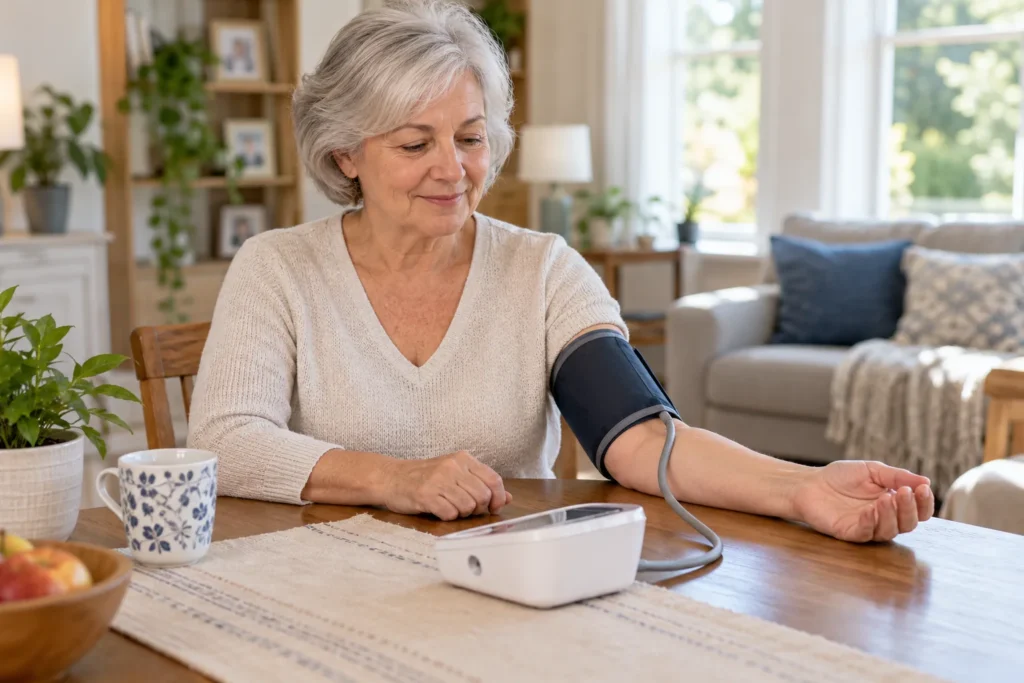
Assess the measurement task as well as the electronics. Can the participant position the cuff correctly, read the display and recognize an unsuccessful reading? Does the transferred record preserve when the measurement was taken? A simple demonstration with the actual cuff size can reveal usability problems that a specification sheet misses.
A cuffless watch estimate should not be substituted merely because it displays the same units. The program must verify the exact device’s intended use and evidence for the proposed measurement.
Blood glucose meters and continuous glucose monitors
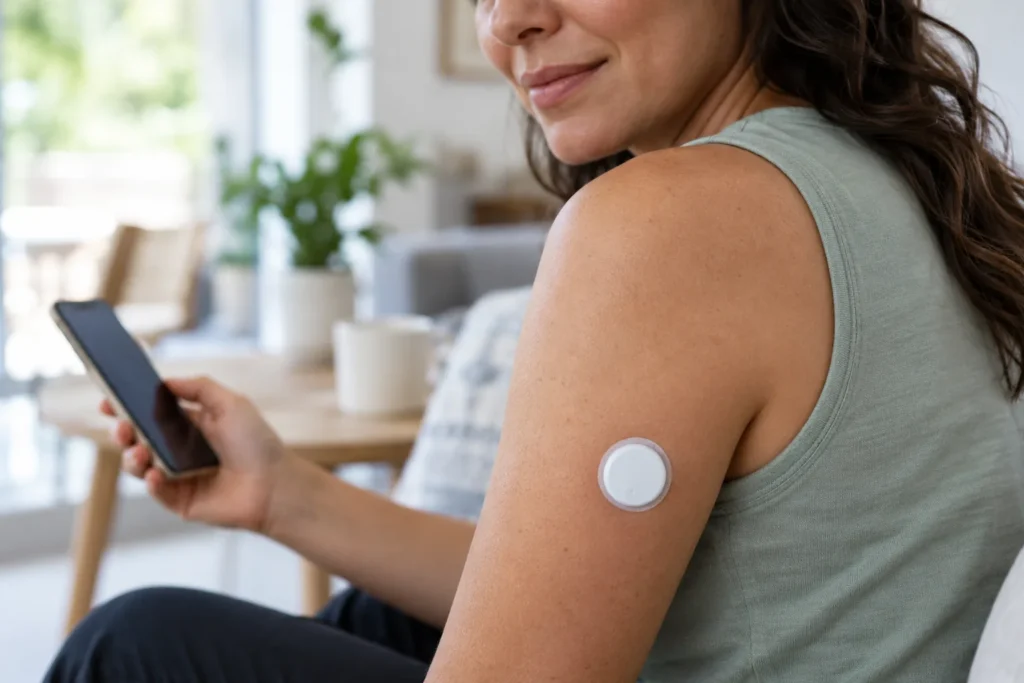
A glucose meter uses a blood sample for a spot result. A CGM uses a sensor, usually inserted under the skin, to estimate glucose in interstitial fluid over time. These produce different information and involve different supplies, user tasks and sharing arrangements.
For a meter, consider strip handling, sample application and whether results reach the program without manual transcription. For a CGM, examine supported indications, sensor replacement, compatible receiving equipment and the provider’s access to the permitted data.
Do not interpret a wrist display as evidence that a watch measures glucose. It may show readings from a separate sensor. Claims that a watch independently measures glucose without piercing the skin require particular scrutiny; the FDA has warned against unauthorized products making that claim.
Pulse oximeters
A pulse oximeter estimates oxygen saturation using light. Its readings have limitations: the FDA notes that poor circulation, skin pigmentation, skin temperature and other factors can affect accuracy. A displayed value should be interpreted under the care team’s protocol alongside the person’s condition, rather than treated as a diagnosis.
Check whether a candidate is intended for medical use or general wellness. Buyers should also examine what happens when the device cannot obtain a reliable signal. The interface should distinguish an unsuccessful measurement from a valid result, so a missing or unreliable reading is not silently treated as normal.
Connected scales
Connected scales support collection of body-weight measurements over time. Their value depends partly on the participant being able to stand or use the selected scale safely, follow the program’s measurement instructions and transmit a correctly assigned reading.
In a shared home, ask how measurements are associated with the enrolled participant. Consider display visibility, physical access, weight capacity and support if the connection fails. A scale’s extra body-composition estimates should not be treated as substitutes for the specific weight measurement the program requested.
What Other Remote Monitoring Devices May a Program Need?
Some programs need measurements outside the four core categories. Connected thermometers can provide temperature readings; supported digital spirometers can record breathing measurements; ECG devices or patches can record the heart’s electrical activity. The appropriate equipment and interpretation depend on the clinical purpose and the device’s intended use.
The recording pattern matters. A thermometer may supply occasional spot readings. A patch may record over a defined wear period, while another device captures an event when the user activates it. Continuous recording does not necessarily mean continuous uploading or continuous human review.
Select these devices because they fill a defined measurement need. A program requesting an ECG recording should evaluate the relevant ECG equipment and review process; an optical pulse reading from a general-purpose watch is a different measurement.
Avoid collecting extra signals without deciding how they will be used. Each additional device brings a task for the participant, equipment to maintain and information the program must be able to interpret.
Where Do Smartwatches and Wearable Sensors Fit?
Wearables can add context between dedicated measurements. Depending on the model and supported functions, they may provide activity or wear trends, selected physiological observations, and supplementary safety or device-status information.
Their role must be stated precisely. Motion, skin contact, wearing position, battery state and the sensor’s algorithms can affect the available data. A missing record may reflect charging or removal rather than a change in health. Buyers need to understand the device’s limitations and how unsuitable or unavailable readings are identified.
Medical suitability depends on the exact intended function, evidence, claims, configuration and market. The FDA’s general-wellness policy is not blanket authorization for a watch to diagnose disease or replace dedicated medical equipment. Individual functions should be evaluated on their own terms.
For example, a program might use a connected cuff for its clinical blood pressure reading while a wearable supplies contextual activity or wear observations under the approved program design. Those records serve different purposes. The wearable does not replace the cuff simply because both appear in the same dashboard.
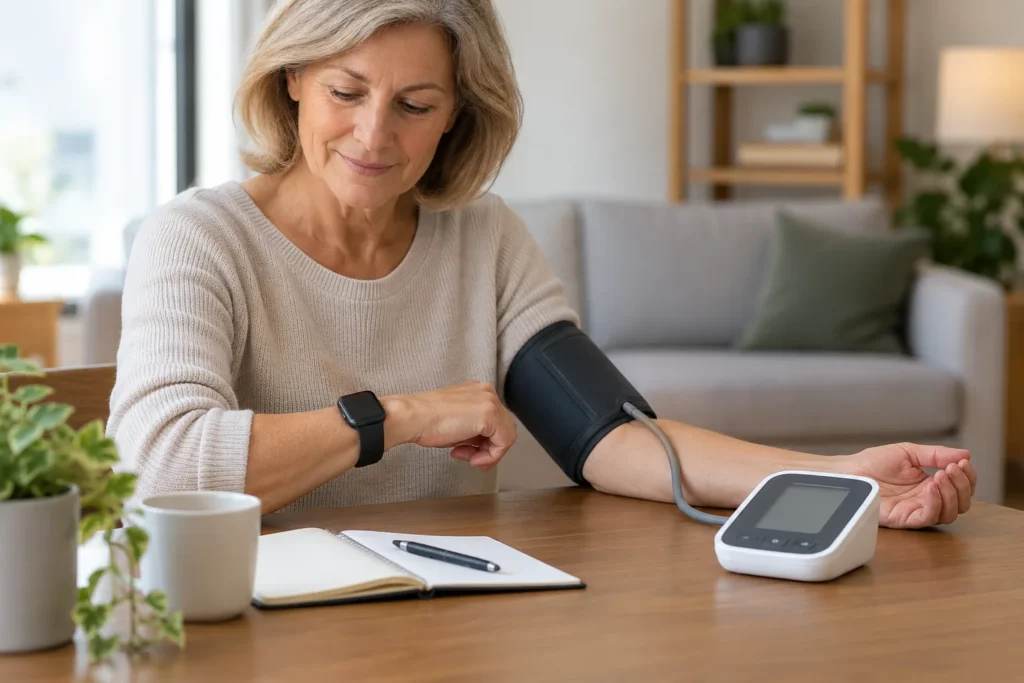
WearIntell’s remote patient monitoring wearables page describes its configurable wearable offering. Dedicated cuffs, glucose monitors, oximeters and scales address different measurement needs and should be evaluated separately against each program’s requirements.
How Do These Devices Send Measurements to a Care Team?
Direct cellular devices use their own supported mobile connection. Bluetooth devices typically pass readings through a paired phone or gateway; Wi-Fi equipment depends on the local network. Each path has setup requirements, such as service activation, pairing, app permissions or network credentials.
Keep three moments distinct: reading taken, reading uploaded, and reading available for clinical review. A reading stored locally during an outage has not necessarily reached the team. An uploaded reading has not necessarily been reviewed by a person.
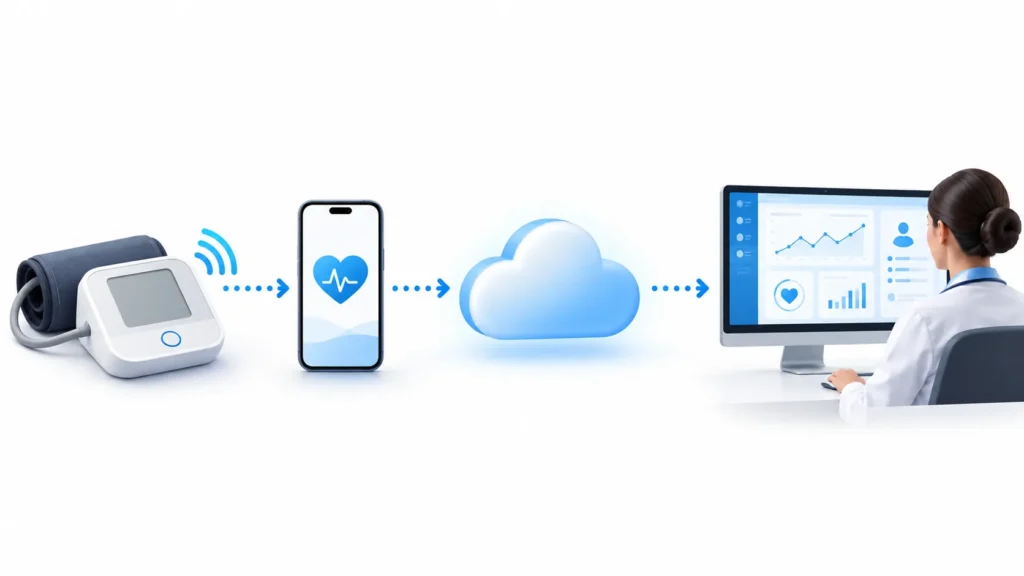
For connected watch projects, smartwatch API integration addresses the deeper interface work. At device-selection stage, establish that the chosen route can deliver identifiable, time-stamped measurements into the intended workflow and make missing data visible.
How Should a Care Program Choose the Right RPM Devices?
Match equipment to the clinical question before comparing brands:
- Home blood pressure: evaluate a suitable, validated cuff, correct sizing and the participant’s measurement routine.
- Glucose monitoring: select a meter or CGM according to the clinician-defined purpose, intended users and supported sharing arrangements.
- Oxygen saturation: assess an appropriately intended oximeter and its limitations where the care plan calls for this measurement.
- Weight trends: choose an accessible scale that reliably associates readings with the participant and supports the prescribed routine.
Then assess the practical fit across that shortlist: participant usability, onboarding effort, connectivity, data completeness, privacy, integration, consumables, replacement and support. A device that is difficult to handle may create missing readings even when its network connection works perfectly.
Ask participants to demonstrate the full task: take a measurement, recognize whether it succeeded and understand what to do if it did not. Confirm who supports that task after enrollment. The clinician or program operator owns the monitoring protocol and clinical decisions; the supplier establishes what the equipment and interfaces support.
Wearable suppliers such as WearIntell should be evaluated for the specific role the program has defined alongside its dedicated measurement equipment. The right device follows the required measurement and the circumstances in which people will use it.