
Heart problems often go unnoticed. Smartwatches offer ECG features. But are these features truly helpful or just for show?
ECG on smartwatches is a critical feature. It helps detect atrial fibrillation (AFib) early. This can prevent serious health issues. It’s not a gimmick.

Smartwatch ECG Overview
That’s a quick summary. Let’s look closer.
What is ECG and How Does it Work on a Smartwatch?
Many people don’t know what ECG is. How does it work on a small device like a watch?
ECG stands for electrocardiogram. It measures the heart’s electrical activity. On a smartwatch, sensors and an app work together to do this.

ECG Explanation
Here’s how it works simply:
Sensors
The watch has sensors. These touch the skin. They detect electrical signals.
App
The smartwatch app processes signals. It creates a graph. This graph shows heart rhythm.
User Interaction
Usually, the user touches a button. This starts the ECG recording.
| Part | What it Does | How it Helps |
|---|---|---|
| Sensors | Detect electrical signals from the heart. | Measures heart activity. |
| App | Processes signals and creates a graph. | Shows heart rhythm in a visual way. |
| User Input | Starts and stops the ECG recording. | Gives the user control over when to take an ECG. |
What Heart Conditions Can a Smartwatch ECG Potentially Detect?
ECG sounds useful. But what specific heart problems can it actually find?
A smartwatch ECG is mainly for finding atrial fibrillation (AFib). This is an irregular heartbeat. It can’t find all heart problems.
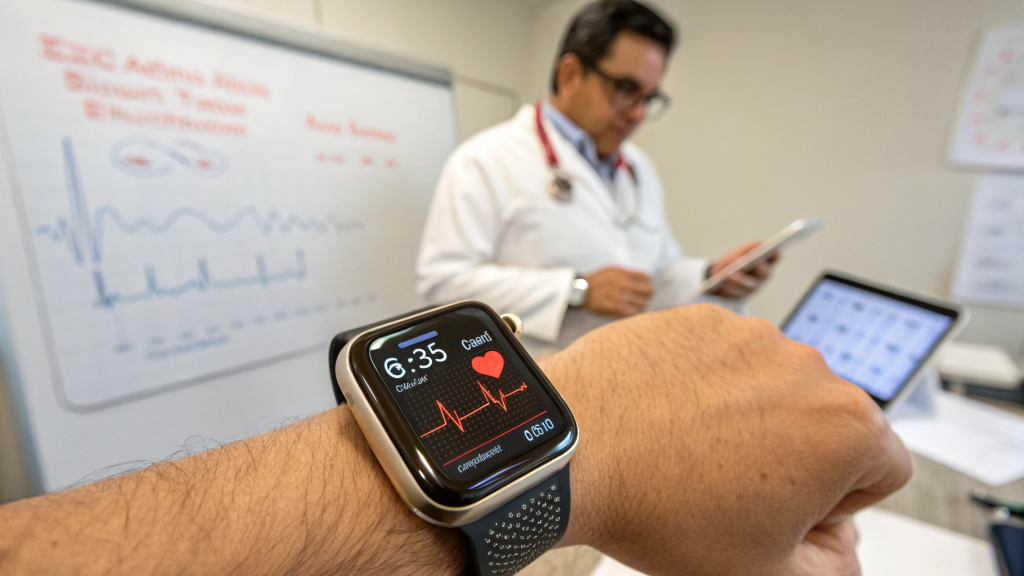
ECG Detection
It’s important to understand what it can and can’t detect:
Atrial Fibrillation (AFib)
This is the main focus. AFib can lead to strokes. Early detection is key.
Other Irregular Rhythms
Sometimes, it can show other rhythm issues. But it’s not made for these.
Heart Attacks
It is not designed to detect heart attacks.
| Condition | Can Detect? | Notes |
|---|---|---|
| Atrial Fibrillation (AFib) | Yes | This is the primary condition smartwatch ECGs are designed to detect. |
| Other Irregular Rhythms | Sometimes | May indicate other rhythm problems, but not reliably. Requires professional interpretation. |
| Heart Attacks | No | Smartwatch ECGs are not designed to detect heart attacks. |
How Accurate are Smartwatch ECG Readings Compared to Medical-Grade ECGs?
Hospitals use ECG machines. How do smartwatch ECGs compare in accuracy?
Smartwatch ECGs are good for detecting AFib. But they are not as complete as medical ECGs. They use fewer “leads.”
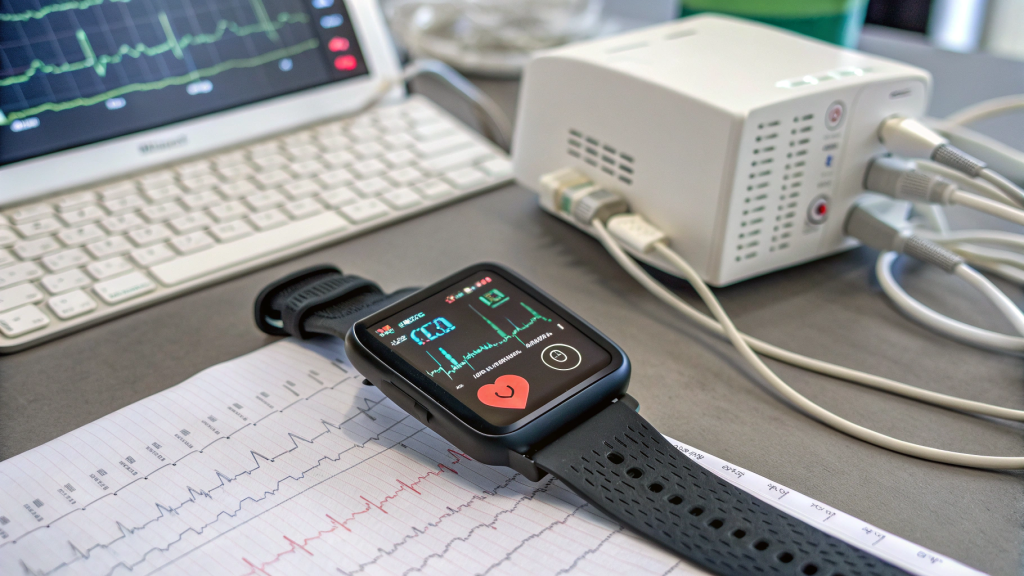
ECG Accuracy
Here’s a simple comparison:
Single-Lead vs. 12-Lead
Medical ECGs use 12 leads. This gives a full view. Smartwatches usually use one lead.
Sensitivity and Specificity
Smartwatches are good at finding AFib. But they can sometimes be wrong.
“Inconclusive” Readings
Sometimes the reading is unclear. This can happen if you move.
| Feature | Smartwatch ECG | Medical-Grade ECG |
|---|---|---|
| Leads | Usually 1 | 12 |
| View of Heart | Limited | Comprehensive |
| Main Use | AFib detection | Full heart check |
| Accuracy | Good for AFib, not perfect | Very accurate |
What are the Limitations of Smartwatch ECG Technology?
Smartwatch ECGs sound useful. But what are their limits?
The main limit is that they only give a partial view of the heart. They are mainly for AFib. They can’t diagnose all heart problems.
Here’s a breakdown of the key limits:
One View
They usually use one “lead.” Medical ECGs use 12. This gives a limited picture.
Not for All Conditions
They are mainly for AFib. They can’t find heart attacks or valve problems.
Can Be Unclear
Movement can cause bad readings. High or low heart rates can too.
Not a Diagnosis
They can suggest a problem. But a doctor must confirm it.
| Limitation | Explanation | What it Means |
|---|---|---|
| Single-Lead | Only measures electrical activity between two points. | Provides a limited view of the heart’s electrical activity. |
| Limited Scope | Primarily designed for AFib detection, not other heart conditions. | Cannot diagnose heart attacks, valve problems, or structural issues. |
| Inconclusive Readings | Can occur due to movement, poor contact, or extreme heart rates. | May require retaking the ECG or seeking professional medical advice. |
| Not Diagnostic | Can indicate potential problems but cannot provide a definitive medical diagnosis. | Requires confirmation and interpretation by a qualified healthcare professional. |
Who Can Benefit Most from Having ECG on Their Smartwatch?
ECG seems helpful for some. But who can benefit most from this feature?
People at risk for AFib benefit most. This includes older adults and those with high blood pressure or other heart conditions.
Here’s a clearer picture of who benefits:
Older Adults
AFib risk increases with age.
High Blood Pressure
This is a risk factor for AFib.
Other Heart Conditions
People with existing conditions may benefit.
Family History
If AFib runs in your family, it might be helpful.
| Group | Why They Benefit |
|---|---|
| Older Adults | AFib risk increases with age. |
| High Blood Pressure | High blood pressure is a risk factor for AFib. |
| Other Heart Conditions | Existing heart conditions can increase AFib risk. |
| Family History | A family history of AFib may indicate a higher risk. |
Is Smartwatch ECG a Replacement for Regular Doctor Visits?
Smartwatches offer ECG. Does this mean you can skip doctor visits?
No, smartwatch ECG is not a replacement for doctor visits. It’s a helpful tool, but it doesn’t replace professional medical care.
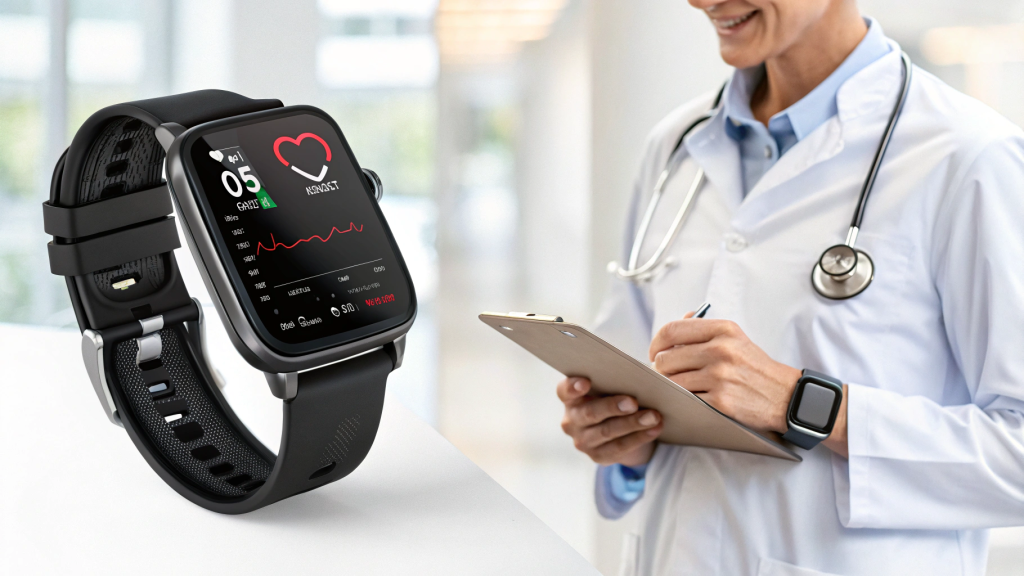
ECG Smartwatch vs Doctor
Here’s why doctor visits are still important:
Complete Checkup
Doctors do more than ECG. They check other health factors.
Expert Opinion
Doctors interpret results. They consider your overall health.
12-Lead ECG
Doctors use a more complete ECG. This gives a better picture.
Treatment
Doctors provide treatment. A watch can only detect, not treat.
| Reason | Explanation |
|---|---|
| Comprehensive Evaluation | Doctors assess overall health, not just heart rhythm. |
| Professional Interpretation | Doctors interpret ECG results in the context of your medical history and other factors. |
| 12-Lead ECG | Doctors use 12-lead ECGs for a more comprehensive view of the heart’s electrical activity. |
| Treatment and Management | Doctors provide diagnosis, treatment plans, and ongoing management of heart conditions. |
What are the Regulatory Approvals (FDA, CE, etc.) Required for ECG Smartwatches?
ECG is a medical feature. What approvals do smartwatches need to offer it?
Smartwatch ECG features often need approval from groups like the FDA (in the US) and CE (in Europe). This shows they are safe and work correctly.
Here’s a simple explanation:
FDA (US)
The Food and Drug Administration checks medical devices. Approval means it’s safe and effective.
CE (Europe)
This marking shows it meets European health and safety standards.
Other Countries
Different countries have their own rules and approval processes.
| Organization | Region | What it Means |
|---|---|---|
| FDA | United States | Approval indicates the device is safe and effective for its intended use. |
| CE | Europe | Marking indicates conformity with European health, safety, and environmental protection standards. |
| Other | Various | Different countries have their own regulatory bodies and approval processes. |
How Can Businesses Leverage ECG Functionality in Smartwatch Marketing?
ECG is a selling point. How can businesses use this feature in marketing?
Businesses can highlight ECG as a health benefit. They can focus on early detection and peace of mind. They must be accurate and responsible.
Here are key points for businesses:
Focus on Health
Promote ECG as a proactive health tool.
Early Detection
Emphasize finding AFib early.
Peace of Mind
Highlight the comfort of knowing your heart rhythm.
Be Responsible
Don’t overstate claims. Make it clear it’s not a replacement for doctors.
Target Audience
Market to those who have the relevant risk profile.
| Strategy | How to Use It |
|---|---|
| Highlight Health Benefits | Emphasize proactive heart health monitoring. |
| Focus on Early Detection | Promote the ability to detect AFib early, potentially preventing serious complications. |
| Offer Peace of Mind | Highlight the reassurance of having on-demand ECG monitoring. |
| Market Responsibly | Avoid overstating claims and emphasize the importance of professional medical advice. |
| Target Audience | Focus on groups with the relevant risk profile. |
Is the Cost of Adding ECG to Smartwatches Justified by Consumer Demand?
ECG adds cost. Is the demand from consumers high enough to justify this?
Yes, the demand for ECG is often high. Many people want to monitor their heart health. This makes the added cost worthwhile for many brands.
Here’s a breakdown of why the cost is often justified:
Growing Awareness
People are more aware of heart health.
Aging Population
Older adults are a key market. AFib risk increases with age.
Competitive Advantage
ECG can make a smartwatch stand out.
Premium Feature
It allows brands to charge more.
| Factor | Why it Matters |
|---|---|
| Increased Awareness | Growing public awareness of heart health issues, particularly AFib. |
| Aging Population | The increasing number of older adults, who are at higher risk for AFib. |
| Competitive Advantage | ECG functionality can differentiate a smartwatch from competitors. |
| Premium Feature | Allows manufacturers to position the smartwatch as a premium product with added value. |
What’s the Future of ECG and Cardiac Monitoring in Wearable Technology?
ECG is here now. What does the future hold for heart monitoring in wearables?
The future includes more accurate sensors, more conditions detected, and AI analysis. Wearables will play a bigger role in heart health.
Here are some key trends:
Better Sensors
More accurate and reliable readings.
More Conditions
Detecting more than just AFib.
AI and Machine Learning
Algorithms will analyze data. They will provide personalized insights.
Continuous Monitoring
Tracking heart rhythm all the time, not just on demand.
Remote Monitoring
Doctors could monitor patients remotely using wearable data.
| Future Trend | What it Means | Potential Impact |
|---|---|---|
| Improved Sensors | More accurate and reliable ECG readings. | Earlier and more precise detection of heart conditions. |
| Expanded Detection | Ability to detect a wider range of heart conditions beyond AFib. | More comprehensive heart health monitoring. |
| AI-Powered Analysis | Algorithms analyze ECG data to provide personalized insights and predictions. | Proactive and personalized heart health management. |
| Continuous Monitoring | Tracking heart rhythm continuously, not just on-demand. | Increased sensitivity for detecting intermittent or asymptomatic events. |
| Remote Monitoring | Enabling healthcare providers to monitor patients’ heart health remotely using wearable data. | Improved access to care, especially for patients in remote areas or with limited mobility. |
Conclusion
ECG on smartwatches is a valuable feature, not a gimmick. It helps detect AFib early. It’s not a replacement for doctors, but it’s a powerful tool for heart health.